I now review my Instacart orders instead of building them by hand. On July 4, I opened a cart Codex had loaded and found several things I needed to fix. The thread below is the feedback I gave Codex that day:
okay hold on - changes needed.
1. We use strip steak for that meal - you should know that
2. We only need chicken for salads correct? We use the wegmans lemon season chicken
3. need two salmons
4. Dont like those alexia hash browns. I just use the mini potatoes and cut them up for breakfast hash
5. We also do two good vanilla yogurt
6. I dont need parmesean cheese.
7. You only loaded one barbell bar
8. what is the honey mama honey treat?
9. Where is the ground turkey?
And then:
This was really poorly done today
I caught those mistakes during my cart review, before checkout. I am starting with this flawed run because it shows how the skill got better: use it, catch what is wrong, tell Codex what to change, and make the correction part of the next run.
That list came at the end of a longer conversation. I had started by asking for an easier week:
let switch up lunch this week. GO with something a little easier to make. We can remove one dinner too. Lets remove burgers. Lets also swap out turkey burgers for something else
Codex came back with taco bowls for lunch and a turkey taco skillet for dinner.
We cant have taco bowls for lunch and a turkey taco skillet for dinner. NEed to change one
I swapped flounder for chicken Caesar salads and, when the snacks were wrong, named what we actually wanted that week. I asked if the quantities were right and listed the pantry items we did not need to buy.
I have black beans, rice, olive oil, salsa
After all of that:
lets load the cart
That produced the nine corrections, so I asked Codex to audit the cart one more time.
do one more review to confrim you have everything we discussed
By the end of the thread, we had Turkey Taco Bowls for lunch, plus steak fajita bowls, chicken Caesar salads, breakfast hash, and salmon with green beans for dinner. After all that back-and-forth, the Instacart cart had 27 items and was ready for my review; checkout and scheduling would stay with me.
Then I closed the loop:
okay now take what we learned from this session and update our skill
This is the part of Codex I find useful. I explain what is wrong in the task where I found it, review the next attempt, and tell Codex when the lesson should become part of the skill. I do not have to rewrite the automation myself every time a preference changes.
The grocery automation needed a bigger change after that run. It was trying to choose our final menu before either of us had seen the options.
One week later, I wrote:
Instead of trying to create exact meals we need, I want you to suggest 10 meals for dinner each week and 2 meals for lunch. These should be presented in email to myself and jill.
Then one of either jill or myself will reply to the email with the meals we want that week. Then you will create the grocery order in instacart for us to order.
The first email put snacks in two places. I changed that too:
formatting issue- we have snacks in two places. I want everything were buying in summary top like you have it, then the list at bottom as thats less important. so beverages should get moved up, all snacks combined...etc.
That became the weekly flow we use now.
How the skill works
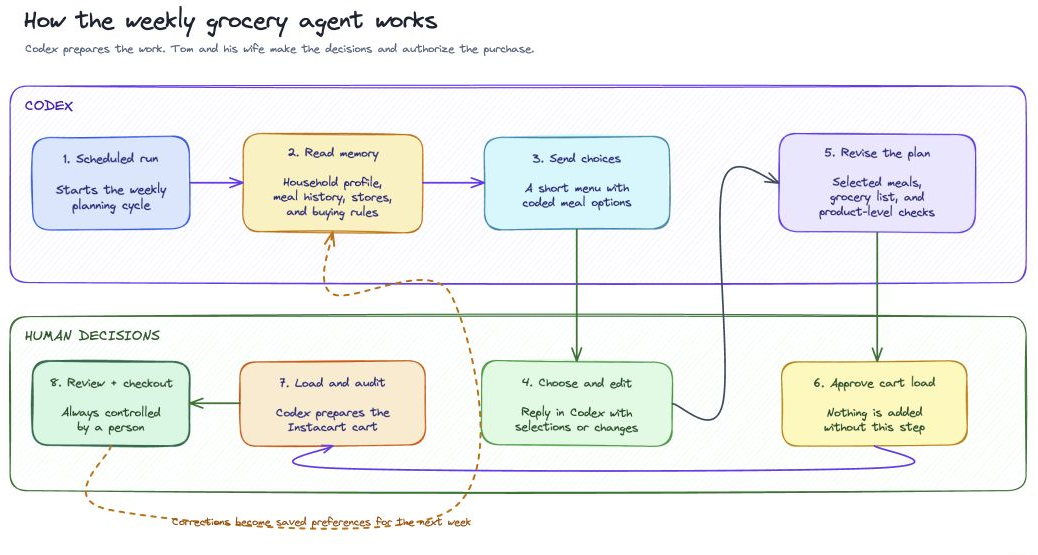
Every Saturday morning, the Codex automation comes up with a potential grocery list for the week. It includes ten dinner options, two meal-prep lunches, snacks, and miscellaneous items we buy often; the list and meal options are emailed to my wife and me, and we down-select the meals by replying.
The automation reads two JSON files: a list of meals and our household profile, which acts as its memory. It has the broad rules—meals around 30 minutes, simple prep, and one steak dinner—but also the details that matter in a real cart. The instructions say to use strip steak, buy the prepared Wegmans chicken for salads, check before buying rice or olive oil, and get actual Yasso bars, the goated low cal ice cream.
After one of us replies, I manually tell Codex to read the email. It revises the grocery list around the meals we picked and removes anything I marked stocked or no-buy. Instacart still has not been touched. If a correction should last beyond that week, I tell Codex to add it to the household file.
I did not write the Python by hand. I described the workflow to Codex, and Codex wrote the scripts that it now runs every Saturday. When I had a question or a new thought while building it, I asked in Codex and worked through the answer there. The skill is the instruction manual around those scripts: what files to read, what checks to run, and where to wait for me.
Once the revised list looks right, I manually tell Codex to populate the Instacart cart, and it searches Wegmans and loads the items. Some products need exact searches: meat cuts, prepared chicken, protein bars, M&M’s, and Yasso bars (goated low cal ice cream). Generic matches have burned me before, so I review the finished cart before scheduling delivery; checkout stays with me.
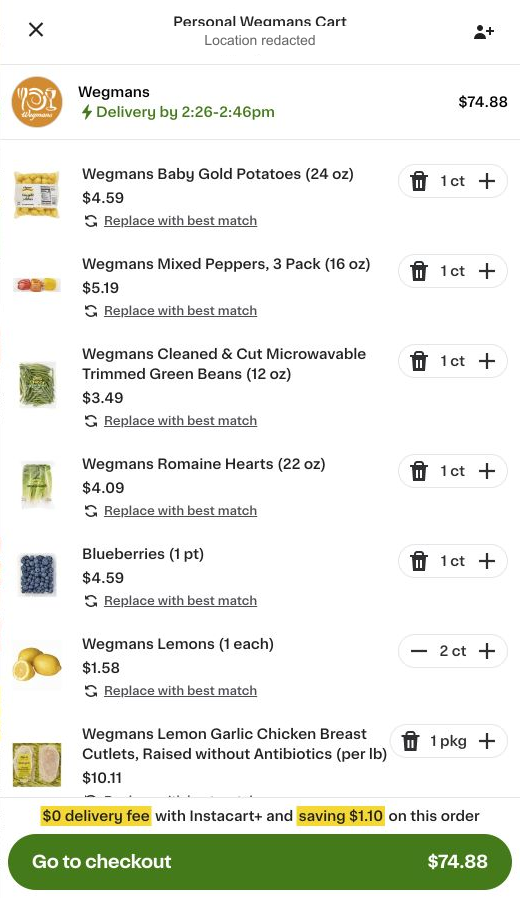
A weekly reply does not need much explanation. It can say that two meals are too similar, we already have rice, skip parmesan, or use the prepared chicken we normally buy for salads.
Trust but verify is still the rule. A different run tried to add parmesan even though our household file says not to buy it unless we ask. The issue was caught before cart loading, but examples like that are why I still review the meals and the cart.
Before this, grocery planning took my wife and me about an hour every week, and clicking Add to Cart was not the problem. We had to decide what we wanted, try to keep it healthy, coordinate the meals, check the pantry, and remember what we bought last time.
With most of the legwork done, I am left with a few tweaks before checkout, and the skill picks those up so the next Saturday should be easier.
That has unlocked a whole new mindset for me: what other weekly tasks can I automate, and how else can I make our lives easier? Groceries were just the low hanging fruit - no pun intended.